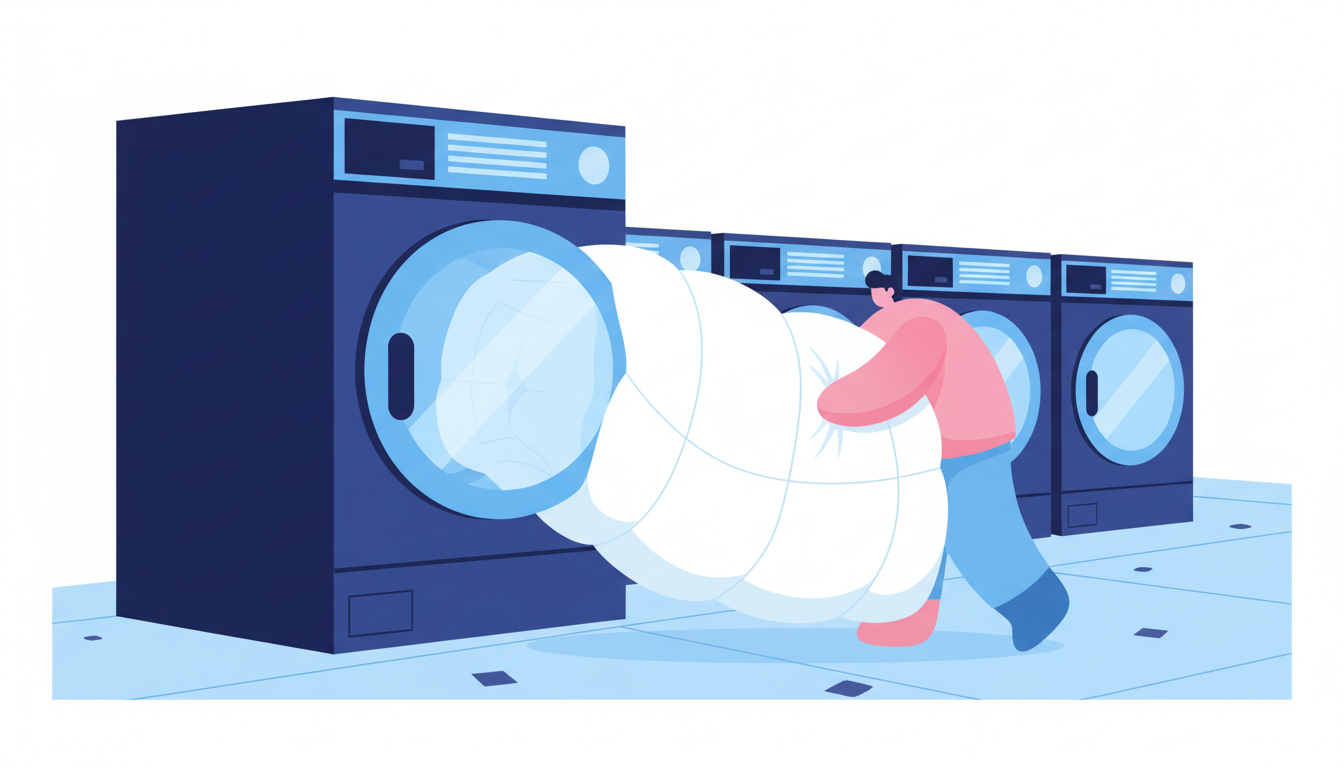
If you've ever tried cramming your doona into a home washing machine, you already know how that story ends. It barely fits, the drum can't spin properly, and you're left with a soggy, unevenly washed mess that takes two days to dry. There's a better way, and it starts with a trip to your local laundromat.
Why Your Home Washer Can't Handle a Doona
Most household washing machines have a drum capacity between 7 and 10 kilograms. A standard queen-size doona weighs around 3 to 4 kilograms when dry, which sounds like it should fit. But here's the catch: a doona needs room to move freely inside the drum so the water and detergent can circulate through all that filling. When you stuff a bulky doona into a small drum, it just sits there in a compressed lump.
The result? The outer fabric might get a rinse, but the inner filling stays dirty. Worse still, the unbalanced load puts enormous strain on the machine's bearings and suspension. Over time, this can cause real damage to your washer. It's one of the most common reasons people end up calling out a repair technician.
A commercial laundromat washer, on the other hand, has the drum space, water pressure, and spin power to wash a doona thoroughly and evenly. It's what these machines were built for.
How to Wash a Doona at a Laundromat: Step by Step
1. Check the Care Label
Before you head out the door, flip your doona over and find the care label. Most polyester, microfibre, and cotton-filled doonas are machine washable. Down and feather doonas can usually be machine washed too, but some require dry cleaning only. If the label says "dry clean only," respect that — a machine wash could ruin the filling. If you're unsure, a warm wash on a gentle cycle is generally the safest option.
2. Pre-Treat Any Stains
Got a coffee spill, a mysterious mark, or a patch that's seen better days? Give it a quick pre-treat before you load the machine. A small amount of liquid laundry detergent or a stain remover spray applied directly to the spot will do the trick. Gently rub it in with your fingers and let it sit for five to ten minutes. This makes a big difference, especially on older stains that have had time to set in.
3. Choose the Right Machine Size
This is the most important step. You want a machine that gives your doona plenty of room to tumble freely. For a single or double doona, an 18KG machine will usually do the job. For a queen or king doona — or if your doona is particularly thick — go for a 27KG washer. The extra space means better water flow, more thorough cleaning, and a proper spin cycle that actually removes water from the filling.
4. Select the Right Cycle and Temperature
A gentle or delicate cycle at 30 to 40 degrees is ideal for most doonas. Warm water helps dissolve body oils and dust mite allergens without being harsh enough to damage the filling or fabric. Avoid hot washes unless the care label specifically says it's safe — high temperatures can cause shrinkage, especially with natural fillings like down.
As for detergent, use a mild, low-sudsing liquid detergent. Powder detergents can clump inside thick bedding and leave residue. You don't need much — a standard dose will do. Skip the fabric softener, as it can coat the filling and reduce its loft over time.
5. Dry Properly on Low Heat
Drying is just as important as washing. Transfer your doona straight to a large commercial dryer and run it on a low to medium heat setting. High heat can scorch the fabric or melt synthetic filling, so patience pays off here. Expect the drying cycle to take 60 to 90 minutes, depending on the thickness of your doona. It's worth running an extra 10-minute cycle to make sure the centre is completely dry — any trapped moisture can lead to mildew and musty odours.
How Often Should You Wash Your Doona?
A good rule of thumb is every three to six months, or roughly at the change of each season. If you use a doona cover (and you should — it's the best way to keep your doona cleaner for longer), you can stretch it closer to the six-month mark. Without a cover, aim for every three months, especially during the warmer months when you tend to sweat more overnight.
People with allergies or asthma may want to wash more frequently, as doonas can harbour dust mites, dead skin cells, and other allergens. A regular warm wash is one of the most effective ways to keep these under control.
Why a Laundromat Is the Best Option
Beyond the obvious size advantage, commercial laundromat machines extract far more water during the spin cycle than home machines. This means faster drying times and less chance of damp spots developing inside your doona. The high-capacity dryers finish the job properly too — something that's nearly impossible with a home clothes line in Melbourne's unpredictable weather.
At Laundry Day, our 27KG washers are purpose-built for bulky items like doonas, quilts, duvets, and heavy blankets. Detergent is included with every wash, and we never charge card fees, so you can tap and go without any surprises. Our machines are modern, well-maintained, and available whenever you need them.
We have three Melbourne locations — Brunswick East, St Albans, and Maribyrnong — all designed to make doona washing as simple as load, start, and go. Whether you're doing a seasonal refresh or tackling a stain emergency, you'll be in and out in about an hour and a half with a doona that looks and smells like new.
So next time your doona is due for a wash, skip the struggle with your home machine and bring it to your nearest Laundry Day. Your doona (and your washing machine) will thank you.
Ready to Freshen Up Your Doona?
Our giant 27KG washers handle doonas, quilts, and blankets with ease. Free detergent, zero card fees.
Find Your Nearest Location