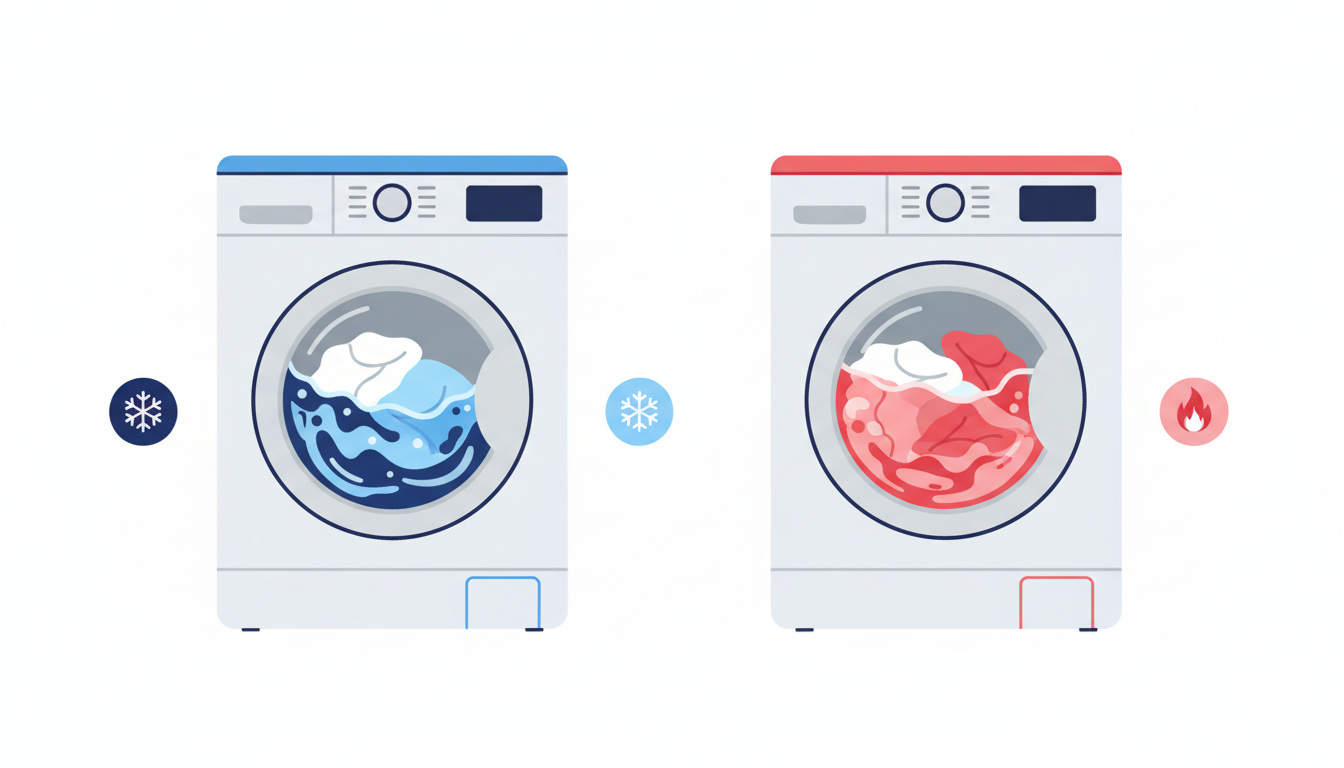
Water temperature is one of the most overlooked decisions in laundry. Most of us just press start without thinking about it, but the temperature you choose affects how clean your clothes come out, how long they last, and how much energy you use. Getting it right isn't complicated — it just takes a little knowledge about what works for different fabrics and stain types.
When to Use Cold Water
Cold water (around 15 to 20 degrees Celsius) is the safe, all-purpose option that works well for the majority of everyday laundry. Here's when it's the best choice:
- Dark and bright colours — Cold water helps prevent colours from bleeding and fading. If you want your blacks to stay black and your reds to stay red, cold is the way to go.
- Delicate fabrics — Silk, lace, wool, and anything labelled "gentle" or "hand wash" should be washed in cold water. Heat can cause these fabrics to shrink, warp, or lose their texture.
- Everyday wear — T-shirts, jeans, casual tops, and lightly worn clothing generally don't need anything more than a cold wash to come out fresh.
- Protein-based stains — Blood, egg, milk, and sweat stains should always be rinsed in cold water first. Hot water actually cooks these proteins into the fabric, making the stain harder to remove.
Cold water washing also saves energy. Heating water accounts for a significant portion of a washing machine's electricity use, so choosing cold when it's appropriate is better for both your wallet and the environment.
When to Use Hot Water
Hot water (50 to 60 degrees Celsius) brings serious cleaning power and is the right choice in specific situations:
- White towels and sheets — Hot water helps remove body oils, dead skin cells, and built-up grime that cold water can't always tackle. It also helps keep whites looking bright rather than grey and dingy over time.
- Heavily soiled items — Work clothes caked in dirt, grease-stained aprons, or anything that's been through a particularly rough day benefits from hot water's stronger cleaning action.
- Sanitising — If someone in your household has been sick, hot water helps kill bacteria and germs. This applies to bedding, towels, and cloths that have been in contact with illness.
- Cloth nappies and cleaning cloths — Items that need to be hygienically clean, not just visually clean, should be washed hot.
Warm Water: The Middle Ground
Warm water (around 30 to 40 degrees Celsius) is an excellent compromise when you're not sure which direction to go. It provides better cleaning power than cold without the risks that come with hot. It's ideal for:
- Permanent-press and synthetic fabrics
- Moderately soiled everyday clothing
- Mixed loads where you have a bit of everything
- Bedding that doesn't specifically require a hot wash
If you could only ever choose one temperature for the rest of your life, warm would be the safest bet. It handles most situations well enough without causing damage to sensitive fabrics.
How Temperature Affects Stain Removal
Temperature and stains have a complicated relationship. The wrong temperature can actually set a stain permanently, so it pays to know the basics:
- Greasy stains (oil, butter, makeup) — Warm to hot water helps dissolve grease. Cold water won't break down oil effectively.
- Protein stains (blood, egg, dairy) — Always start with cold water. Hot water sets protein stains by cooking them into the fibres.
- Tannin stains (coffee, tea, wine) — These respond best to warm water with detergent. Avoid very hot water, which can set the colour.
- Mud and dirt — Let mud dry first, brush off the excess, then wash in cold or warm water.
Fabric-Specific Temperature Guide
Here's a quick reference to keep things simple:
- Cotton — Can handle warm to hot, but dark cottons should stay on cold to prevent fading.
- Polyester and synthetics — Warm or cold. Hot water can cause pilling and damage over time.
- Wool — Cold only, on a gentle cycle. Wool shrinks dramatically in hot water.
- Linen — Warm is fine for most linen; cold for coloured linen to prevent fading.
- Denim — Cold water helps maintain the colour and shape. Hot water can cause significant shrinkage.
- Activewear — Cold water preserves the stretch and moisture-wicking properties of performance fabrics.
Temperature Options at Laundry Day
At Laundry Day, our commercial machines at Brunswick East, St Albans, and Maribyrnong offer multiple temperature settings so you can choose the right wash for every load. Whether you need a cold wash for your delicates or a hot cycle for towels and bedding, you have full control. Detergent is included with every wash and there are no card fees, so you can focus on getting the temperature right without worrying about anything else.
Next time you're standing in front of a washing machine, take a few seconds to think about what's in the load. A quick temperature check can be the difference between clothes that look great for years and clothes that fade, shrink, or wear out too soon.
Wash Smarter, Not Harder
Our commercial machines offer full temperature control for every fabric type. Free detergent, zero card fees.
Find Your Nearest Location