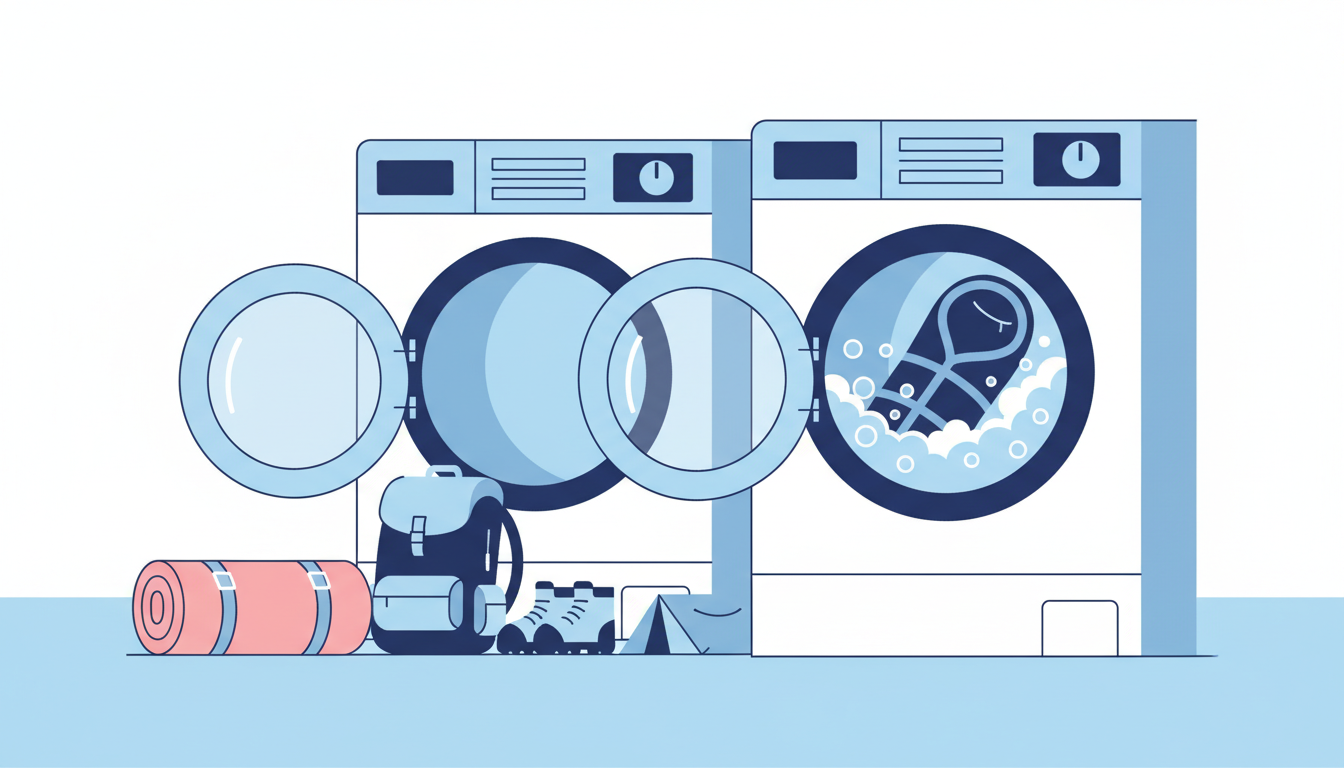
After a weekend of camping, your sleeping bag has earned a proper wash. But if you've ever tried stuffing a full-size sleeping bag into a home washing machine, you'll know it's a losing battle. The drum is too small, the bag can't move freely, and you end up with a poorly washed, unevenly dried lump that smells vaguely of campfire for the next six months. A laundromat is the answer — and it's easier than you might think.
Why Wash Your Sleeping Bag at a Laundromat?
Sleeping bags are bulky by nature. Even when compressed for storage, they spring back to a substantial volume once unrolled. To wash properly, a sleeping bag needs room inside the drum to move, tumble, and let water flow through the insulation. Most household machines simply don't have the capacity for this.
A commercial washer — especially a large-capacity machine like a 27KG washer — gives your sleeping bag the space it needs. The larger drum means better water circulation, more thorough cleaning, and a proper spin cycle that actually removes water from the filling. It's the same reason laundromats are ideal for doonas and heavy blankets: big items need big machines.
Step-by-Step: Washing Your Sleeping Bag
1. Check the Care Label
Before you do anything, find the care label on your sleeping bag and read it. Most modern sleeping bags — both synthetic and down — are machine washable, but some older or specialised bags may require hand washing or professional cleaning. If the label says dry clean only, take it to a dry cleaner. If it says machine washable, you're good to go.
2. Prepare Your Sleeping Bag
Close all the zips and fasten any Velcro tabs to prevent them from snagging during the wash. Turn the sleeping bag inside out — this helps clean the interior surface where sweat, body oils, and dirt accumulate most. Shake out any loose debris like leaves, sand, or crumbs. If there are any visible stains, apply a small amount of liquid detergent directly to the spot and gently rub it in before loading.
3. Choose the Right Cycle
Select a gentle or delicate cycle with cold water. Sleeping bag fabrics and insulation don't respond well to aggressive agitation or high temperatures. Cold water protects the fabric coatings (many sleeping bags have a durable water-repellent finish) and prevents any shrinkage of the shell material. A gentle cycle mimics hand washing while being far more convenient.
4. Use the Right Detergent
This matters more than most people realise. Use a small amount of mild liquid detergent — never powder, as it can clump inside the insulation and leave residue. If you have a down sleeping bag, use a specialist down wash (available from most outdoor retailers). Standard detergent can strip the natural oils from down feathers, reducing their ability to loft and insulate. For synthetic sleeping bags, any mild liquid detergent works fine. In both cases, less is more — you don't need much.
5. Dry Carefully on Low Heat
Drying is where patience really counts. Transfer your sleeping bag to a large commercial dryer and set it to low heat. High temperatures can damage the insulation, melt the fabric coatings, and compromise the sleeping bag's warmth rating. Expect the drying process to take multiple cycles — sleeping bags hold a lot of moisture deep in the filling, and it takes time for it all to evaporate.
Toss two or three clean tennis balls (or dryer balls) into the dryer with your sleeping bag. They bounce around inside the drum and break up clumps of insulation as the bag tumbles, helping it dry evenly and restore its loft. This trick works especially well with down sleeping bags, where wet feathers tend to stick together in heavy lumps.
Between cycles, pull the sleeping bag out and check for any remaining clumps. Gently break them apart with your hands and redistribute the insulation evenly before running another cycle. Repeat until the sleeping bag feels completely dry throughout — not just on the surface.
6. Check Before Storing
Before you pack your sleeping bag away, make absolutely sure it's fully dry. Any trapped moisture will lead to mould, mildew, and a musty smell that's very difficult to remove. Squeeze different sections of the bag and check for any cool or damp spots, particularly in the foot box and hood area where insulation is thickest.
Synthetic vs Down: What's Different?
The washing process is largely the same for both types, with one key difference: detergent. Synthetic sleeping bags are more forgiving — they dry faster, maintain loft when wet, and work fine with standard mild detergent. Down sleeping bags require a specialist down wash to preserve the natural oils in the feathers. They also take considerably longer to dry, so budget extra time (and dryer cycles) for a down bag.
Both types benefit from the occasional wash. Body oils, sweat, and dirt build up in the insulation over time and reduce its ability to trap warm air — which is literally the whole point of a sleeping bag. A clean sleeping bag is a warmer sleeping bag.
How Often Should You Wash Your Sleeping Bag?
Sleeping bags don't need washing after every trip. Overwashing can actually wear down the insulation and fabric coatings over time. As a general rule, wash your sleeping bag once or twice a season if you camp regularly, or after every four to six trips. If you've had a particularly muddy, sweaty, or spill-prone adventure, wash it sooner rather than later — stains and body oils are easier to remove before they've had time to set in.
Between washes, you can keep your sleeping bag fresher by airing it out after each trip. Unzip it fully, drape it over a clothesline or fence in the shade, and let it breathe for a few hours before packing it away. Using a sleeping bag liner is another smart move — liners are lightweight, easy to wash at home, and they protect the interior of your bag from sweat and dirt, reducing how often the bag itself needs a full wash.
Bring It to Laundry Day
Our 27KG commercial washers are perfect for sleeping bags, giving them the drum space they need for a thorough, even wash. The large dryers make the drying process quicker too, and you can run as many cycles as you need without worrying about tying up your machine at home for half a day.
Laundry Day locations in Brunswick East (220 Lygon St), St Albans (4/329 Main Road East), and Maribyrnong (103 Rosamond Rd) are open seven days from 6 AM to 10 PM. Detergent is free with every wash, and we never charge card fees. Bring your sleeping bag in after your next camping trip and you'll have it clean, fresh, and ready for the next adventure in a couple of hours.
Camping Gear Need a Wash?
Our 27KG washers are built for sleeping bags, doonas, and bulky items. Free detergent, zero card fees.
Find Your Nearest Location